Kidney stones: pain, size and your report
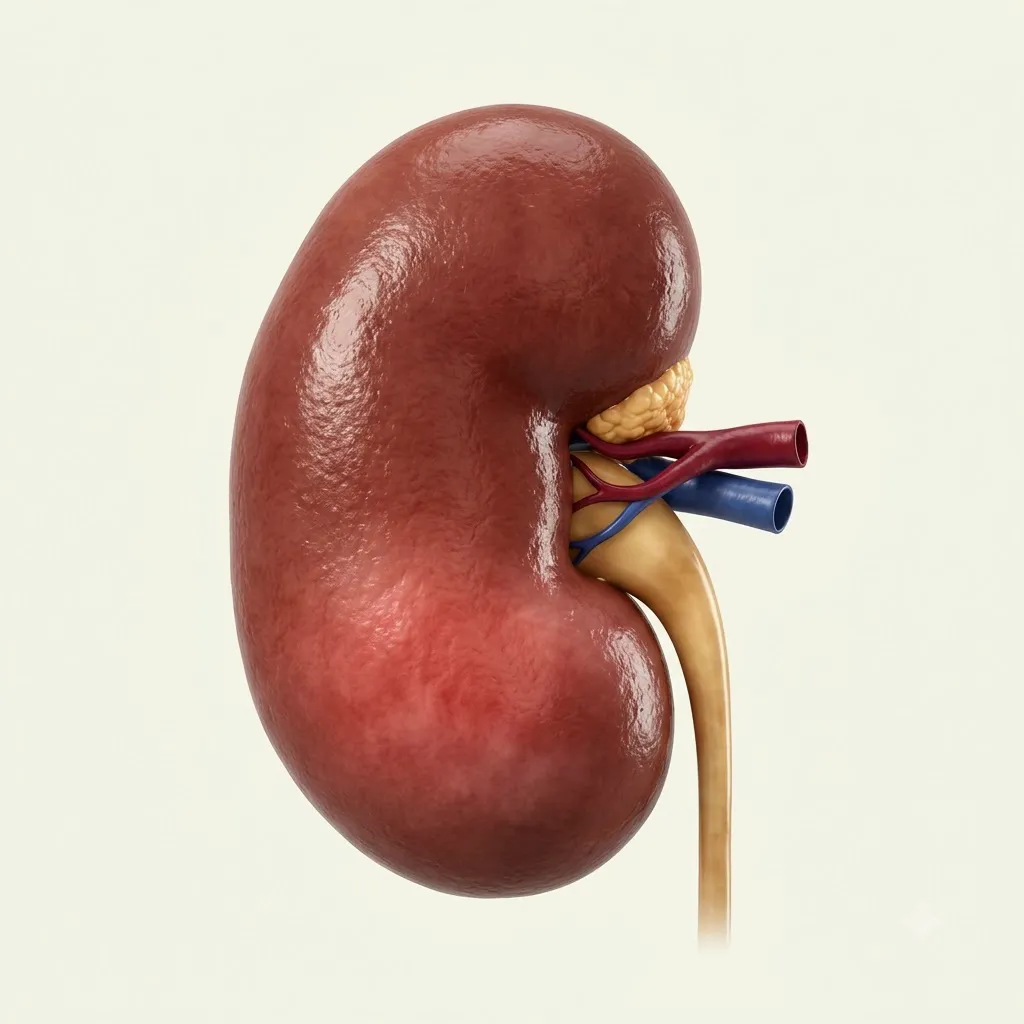
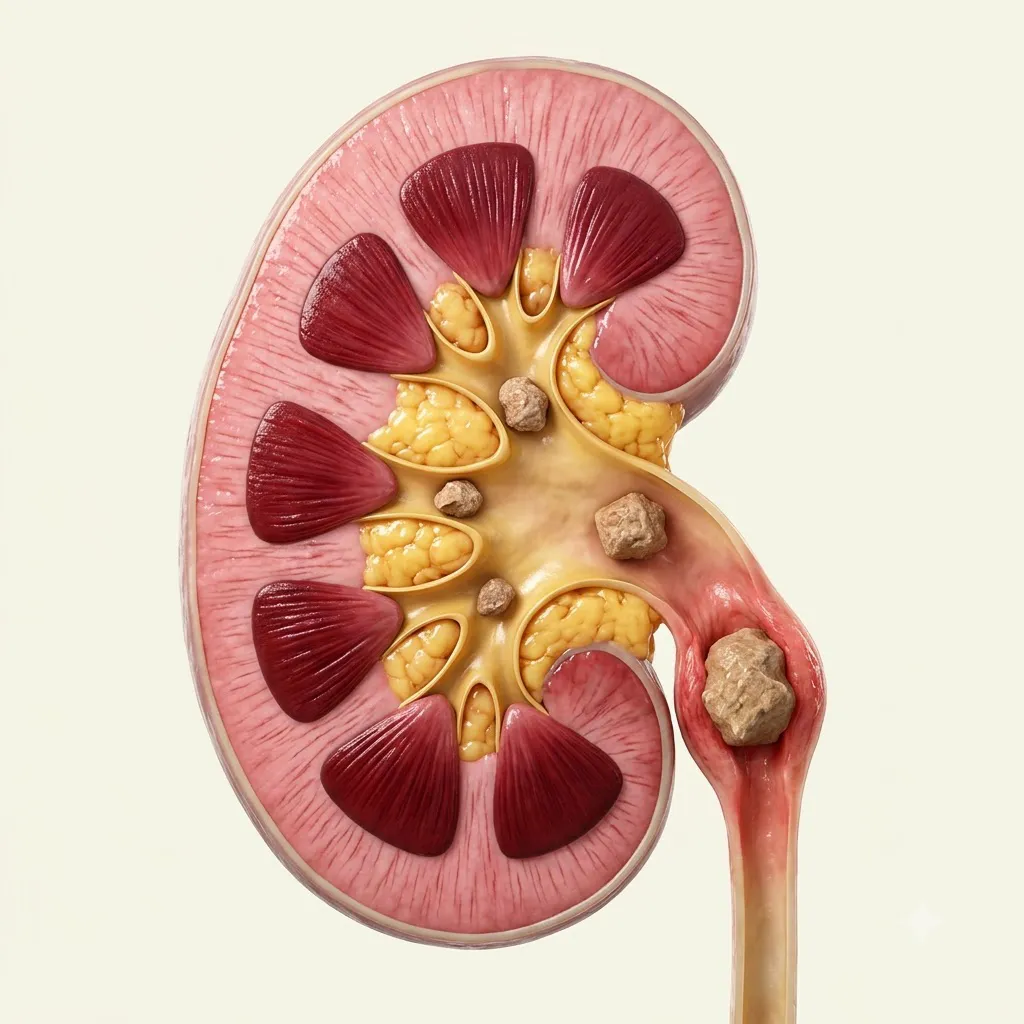
A kidney stone is a hard piece that forms in the kidney from minerals in urine. A small stone may pass in urine without pain. A bigger stone can get stuck in the narrow tube below the kidney and cause strong pain.
Doctor: Dr. Satyawan Gadade, BAMS, MBA
Understand your sonography report
Sonography report sample
Left kidney is normal in size. A measuring is seen in the , with . .
Calculus
A stone. "Calculi" means more than one stone.
8 mm
The size of the stone. The place of the stone, any block and your pain are also important.
Posterior acoustic shadowing
Sound does not pass through a stone, so there is a dark band behind it. It helps to tell a stone from sludge or a polyp.
Wall thickness 2.4 mm
The thickness of the gallbladder wall. Up to about 3 mm is normal. A thicker wall can mean swelling.
CBD not dilated
The common bile duct, the pipe that takes bile to the intestine. "Not dilated" means it is not swollen.
No hydronephrosis
Hydronephrosis is a kidney swollen by urine that cannot drain. "No" means none is seen.
Lower calyx
A cup in the lower part of the kidney. A stone can stay here for a long time without pain.
Where does a kidney stone hurt?
The pain starts in the back or side, below the ribs. As the stone moves down, the pain moves to the lower belly and groin. It often comes in waves.
| Where the stone is | Where you may feel it |
|---|---|
| Resting inside the kidney | Often nothing, or a dull ache in the back or side |
| Top of the tube (PUJ, upper ureter) | Sharp pain in the side, below the ribs |
| Middle of the tube | The side and the front of the belly |
| Bottom of the tube (VUJ) | Lower belly and groin, burning, and the urge to pass urine again and again |
| In the bladder | Lower belly, and trouble passing urine |
Urine infection, appendix, ovary problems and back muscle pain can feel the same. A sonography helps to find the cause.
Signs of a kidney stone
- Sharp pain in the back or the side that comes and goes in waves
- Pain that moves to the lower belly or the groin
- Pain or burning while passing urine, or passing only a little
- Pink, red or brown urine, or urine that is cloudy or smells bad
- Feeling sick, or vomiting, with the pain
- Fever or chills: this can mean an infection, and it cannot wait
The signs are the same in men and women. In women it can feel like period pain or an ovary problem, so please tell us about your periods too. Some stones give no pain and are found in a test for something else.
Meaning of the size in mm
A report gives the size in millimetres; 10 mm is 1 cm. A small stone in the tube is more likely to pass in urine. No size is certain. These are the numbers in the European urology guideline for stones in the tube.
| On the report | What the studies found |
|---|---|
| Up to 4 mm | About 95 in 100 passed within 40 days |
| Under 5 mm | Almost 75 in 100 passed |
| Above 5 mm | About 62 in 100 passed, and fewer as the size grows |
| Top of the tube | 49 in 100 passed |
| Middle of the tube | 58 in 100 passed |
| Bottom of the tube | 68 in 100 passed, on average in about 17 days |
These numbers are not for stones inside the kidney. For fever, no urine or pain that does not stop, go to a hospital, whatever the size.
Meaning of the words in the report
The place of the stone is as important as its size.
- Calculus
- A stone. "Calculi" means more than one
- Calyx (upper, mid, lower)
- A cup inside the kidney where a stone can rest
- Renal pelvis
- The funnel where urine collects
- PUJ
- The narrow start of the tube to the bladder
- Ureter
- The tube from the kidney to the bladder
- VUJ
- The narrow end of the tube, at the bladder
- Hydronephrosis
- The kidney is swollen because urine cannot drain freely
Which tests show a stone?
- Sonography (USG): usually the first test. No radiation
- CT (often written NCCT KUB): shows small stones and stones in the tube more clearly
- Urine test: blood, infection, crystals
- Blood test: creatinine (how the kidneys work), calcium, uric acid
- If a stone comes out, keep it dry in a small box and bring it. A lab can tell its type
We tell you which test you need. Bring your old reports too, so that we can compare.
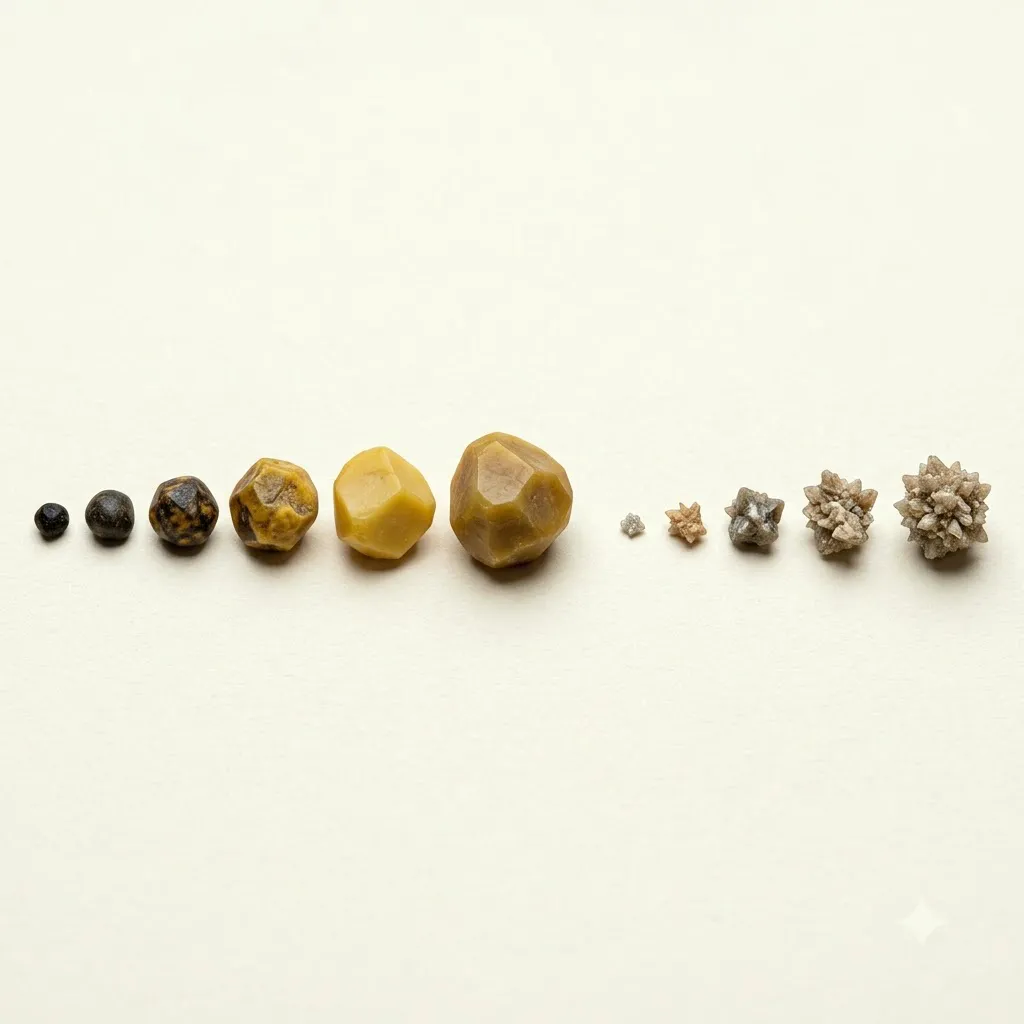
Types of kidney stones
| Type | What it is linked to |
|---|---|
| Calcium oxalate | The most common. Too little water, much salt, food high in oxalate |
| Calcium phosphate | Too much calcium in the urine |
| Uric acid | Urine that is too acidic, a lot of meat and fish, gout |
| Struvite | Comes after urine infections, and can grow fast |
| Cystine | Rare, and runs in families |
Causes of kidney stones
- Drinking too little water
- A stone before, or stones in the family
- Too much salt, and a lot of meat, fish or eggs
- Some conditions: gout, repeated urine infections, obesity, some bowel and gland problems
- Some medicines taken for a long time
If you work in the heat, drink water through the day.
Water and diet
- For adults who get stones: 2.5 to 3 litres of fluid a day, through the day. If the urine is dark, drink more.
- A little fresh lemon juice in water is fine.
- Salt: about 5 g a day, one level teaspoon, all food counted. Papad, pickle, farsan and packet food have a lot of salt.
- Do not stop milk and curd on your own. Calcium from food does not raise the risk of the common stones.
- Less alcohol and fewer cold drinks.
If you have kidney or heart disease, or have been told to limit water, ask us before you drink more.
Hospital procedures for kidney stones
Doctors usually wait for a small stone to pass. When a stone is big, stuck, infected or harming the kidney, a urologist may advise one of these.
- Shock wave (ESWL)
- Waves from outside break the stone, and the pieces pass with urine
- Ureteroscopy (URS, RIRS, laser)
- A thin scope goes up the urine passage to break or take out the stone
- PCNL
- A small cut in the back, for bigger stones in the kidney
- DJ stent
- A soft tube left inside for some days so that urine can drain
A urologist does these in a hospital. If you have been advised one, bring the advice and the report. We explain both to you.
Kidney stone in Ayurveda
Ayurveda calls it ashmari. The Sushruta Samhita (Nidanasthana 3) names four types: vataja, pittaja, kaphaja and shukraja.
We advise you after we see your report.
Your visit
- Bring your sonography or CT report, old ones too. You can send it on WhatsApp first.
- We ask where it hurts, since when, and about earlier treatment.
- We explain your report, the diet and the medicine.
- Come again on the date we give you, with a new report if we ask for one.
What to bring to the first visitClinic address, timings and fee
Go to a hospital now
Do not wait for an appointment if you have:
- Pain with fever, chills or shivering
- Yellow eyes or skin, or tea-coloured urine
- Vomiting that does not stop
- No urine, or only a few drops
- A lot of blood in the urine
- Pain so strong you cannot sit still or stand straight
Questions
How big a kidney stone can pass by itself?
In the studies behind the European guideline, about 95 in 100 stones up to 4 mm in the tube passed within 40 days, almost 75 in 100 under 5 mm, and about 62 in 100 above 5 mm. The place of the stone and any swelling of the kidney are also important.
What does "4 mm calculus in the lower calyx" mean?
A 4 mm stone in the lowest cup of the kidney. A stone can stay there for a long time without pain. Doctors repeat the sonography, and sooner if there is pain, fever or blood in urine.
Is hydronephrosis serious?
It means the kidney is swollen because urine is not draining. Show the report to a doctor the same day. Go to a hospital at once if there is fever, vomiting that does not stop, or no urine.
Should I do a sonography or a CT?
A sonography is often the first test. A CT shows small stones and stones in the tube more clearly. We tell you which one you need.
My pain has gone. Is the stone gone too?
Not always. The stone may still be there. A new report shows it.
I had one stone. Will I get another?
It is possible. Drink enough water through the day and eat less salt.
Does beer take a stone out?
No. Alcohol makes the body lose water. Drink plain water through the day.
Can I drink milk with a kidney stone?
Yes, in the usual amount. Do not stop milk and curd on your own. Please ask us before you take calcium tablets.
Which doctor should I see for a kidney stone?
For an emergency, go to a hospital. For an operation, see a urologist. For your report, diet and Ayurvedic consultation, meet Dr. Satyawan Gadade, BAMS, by appointment, every day, 10 am to 2 pm and 6 pm to 10 pm.
Where in Pimpri-Chinchwad can I show my stone report?
At Dhanvantari Clinic, Shop No. 8, M. B. Tapkir Market, near Heera Sweet, Tapkir Mala, Kalewadi, Pimpri, Pune 411017. Call or WhatsApp 77988 79979 for an appointment. The consultation fee is Rs 300.
Book an appointment
Dr. Satyawan Gadade
Every day, only by appointment: 10 am to 2 pm and 6 pm to 10 pm
Updated 23 November 2026. Sources: Guidelines on Urolithiasis 2022, European Association of Urology; Kidney stones, NIDDK; Kidney stones, NHS; Hydronephrosis, NHS; Sushruta Samhita, Nidanasthana 3 (translation).