
Meaning of the words in a sonography report
First read the last part, the impression. For a stone, check four things: the word calculus, the size in mm, the place, and any swelling (hydronephrosis, dilated).
Doctor: Dr. Satyawan Gadade, BAMS, MBA
Understand your sonography report
Sonography report sample
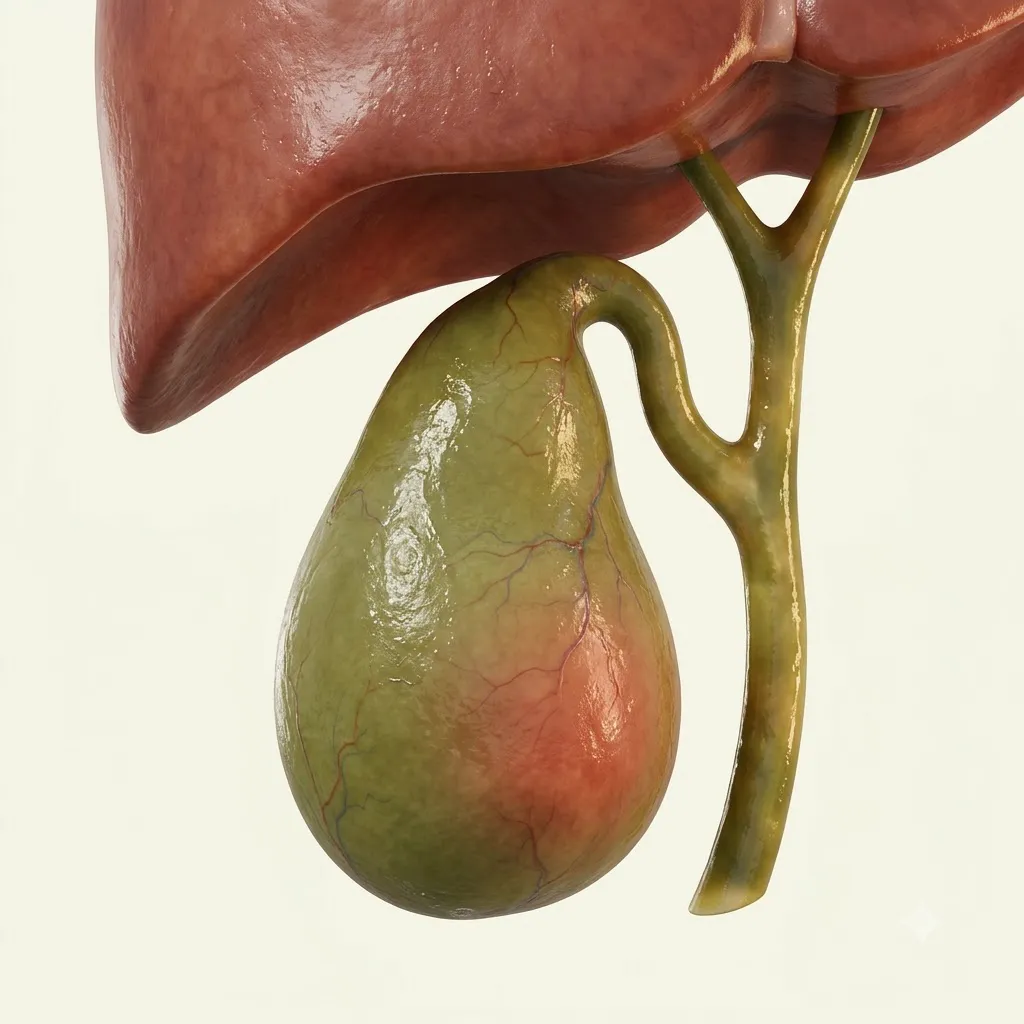
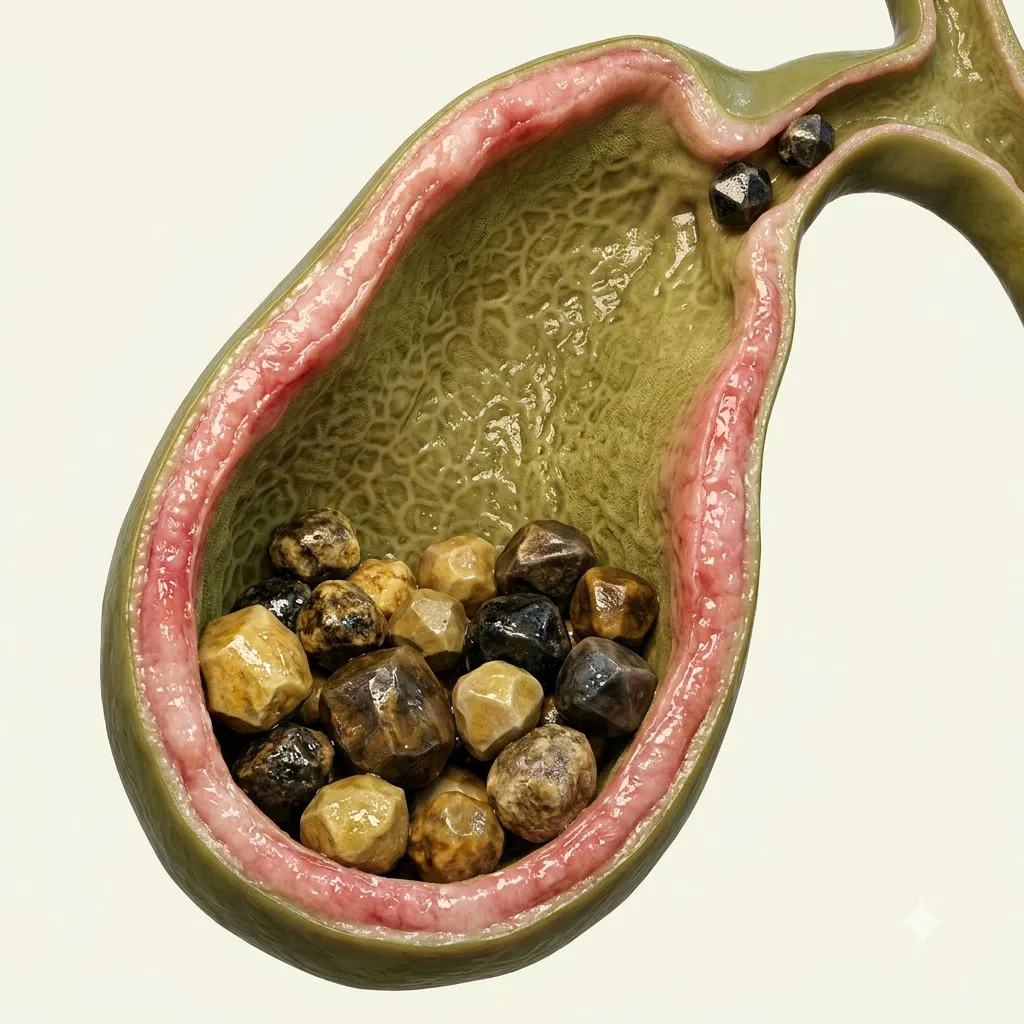
Gall bladder is well distended. A measuring is seen in its lumen, with . . .
Sonography report sample
Left kidney is normal in size. A measuring is seen in the , with . .
Calculus
A stone. "Calculi" means more than one stone.
8 mm
The size of the stone. The place of the stone, any block and your pain are also important.
Posterior acoustic shadowing
Sound does not pass through a stone, so there is a dark band behind it. It helps to tell a stone from sludge or a polyp.
Wall thickness 2.4 mm
The thickness of the gallbladder wall. Up to about 3 mm is normal. A thicker wall can mean swelling.
CBD not dilated
The common bile duct, the pipe that takes bile to the intestine. "Not dilated" means it is not swollen.
No hydronephrosis
Hydronephrosis is a kidney swollen by urine that cannot drain. "No" means none is seen.
Lower calyx
A cup in the lower part of the kidney. A stone can stay here for a long time without pain.
How to read a sonography report
- Check the name, the age and the date.
- Go to the end: "Impression". It is the summary.
- Find the size in mm and the place of each stone.
- Look for "hydronephrosis", "dilated" or "thickened": these say something is swollen or blocked.
- Look for "right", "left" or "bilateral" (both sides).
- Compare the size with your last report.
The doctor looks at the report along with your history.
Gallbladder words
- Cholelithiasis
- Stones in the gallbladder
- Calculus / calculi
- A stone / stones
- Sludge
- Thick bile, not yet a stone; it moves slowly and casts no shadow
- Polyp
- A small growth on the wall; it does not move and casts no shadow
- Wall thickness
- Under 3 mm is usual on an empty stomach
- Contracted
- Shrunk, often because you had eaten
- Distended
- Full, which is normal on an empty stomach
- CBD
- The common bile duct, the pipe to the intestine. Usually up to about 6 mm
- IHBR
- The small bile pipes inside the liver
- Pericholecystic fluid
- Fluid around the gallbladder
- Cholecystitis
- The gallbladder is inflamed
Kidney and ureter words
- Calculus / calculi
- A stone / stones
- Calyx (upper, mid, lower pole)
- A cup inside the kidney where a stone can rest
- Renal pelvis
- The funnel of the kidney where urine collects
- PUJ (pelviureteric junction)
- The narrow start of the tube below the kidney
- Ureter (upper, mid, lower)
- The tube from the kidney to the bladder
- VUJ (vesicoureteric junction)
- The narrow end of the tube, where it enters the bladder
- KUB
- Kidney, ureter, bladder: the whole urine passage
- Hydronephrosis
- The kidney is swollen because urine cannot drain freely
- Hydroureter
- The tube is swollen above a block
- Echogenic focus
- A bright spot. It may or may not be a stone
- Posterior acoustic shadowing
- The dark band behind a stone, where sound cannot pass
- Bilateral
- On both sides
- Simple cyst
- A small bag of water in the kidney, common with age
- Post-void residue (PVR)
- Urine left in the bladder after passing it
Hydronephrosis: mild, moderate, severe
Hydronephrosis is swelling of a kidney from urine that cannot drain. A stone is one cause; pregnancy, a large prostate and infection are others. The grade tells how much swelling there is.
- Mild
- The funnel of the kidney is a little wide
- Moderate
- The cups inside the kidney are wide too
- Severe
- The cups are very wide, and the working part of the kidney looks thin
Show the report to a doctor the same day. With fever, vomiting that does not stop or no urine, go to a hospital at once.
Example lines and their meaning
| Report | Meaning |
|---|---|
| 4 mm calculus in lower calyx of left kidney. No hydronephrosis. | A 4 mm stone in the lowest cup of the left kidney. The kidney is not swollen. |
| 6 mm calculus at right VUJ with mild hydroureteronephrosis. | A 6 mm stone at the end of the right tube, near the bladder. The tube and the kidney above it are a little swollen. |
| 8 mm calculus at left PUJ with moderate hydronephrosis. | An 8 mm stone where the left tube starts. The kidney is swollen. Show it to a doctor the same day. |
| Few tiny concretions in both kidneys. | Very small crystals in both kidneys. |
| Multiple calculi in GB, largest 9 mm. Wall thickness 2.5 mm. | Many stones in the gallbladder, the biggest 9 mm. The wall is normal. |
| GB sludge noted. No calculus. | Thick bile in the gallbladder, no stone. |
| 5 mm non-mobile, non-shadowing lesion: polyp. | A 5 mm growth on the wall that does not move: a polyp, not a stone. |
| CBD not dilated. | The bile duct is not swollen. |
These are sample lines.
Before the sonography
- Gallbladder: come fasting, as the centre tells you (often 6 to 8 hours). After food the gallbladder shrinks and a stone can be missed.
- Kidney and bladder: drink water and come with a full bladder.
- Carry the last report, so that the sizes can be compared.
- Tell the centre where it hurts.
When is a CT scan needed?
A sonography can miss a small stone, or a stone in the middle of the tube. A CT without dye (NCCT KUB) shows the size, the place and any block more clearly. It uses radiation, so it is done only when a doctor asks for it.
Go to a hospital now
Do not wait for an appointment if you have:
- Pain with fever, chills or shivering
- Yellow eyes or skin, or tea-coloured urine
- Vomiting that does not stop
- No urine, or only a few drops
- A lot of blood in the urine
- Pain so strong you cannot sit still or stand straight
Questions
What does calculus in kidney mean?
A stone in the kidney. "Calculi" means more than one stone. The number in mm is the size.
What is the meaning of hydronephrosis?
Swelling of the kidney because urine cannot drain freely. A stone in the tube is one cause. It is graded mild, moderate or severe.
What is a VUJ calculus?
A stone at the vesicoureteric junction, the narrow end of the tube where it enters the bladder. It can cause pain in the lower belly and groin and an urge to pass urine often.
What is a PUJ calculus?
A stone at the pelviureteric junction, where the kidney meets the tube. It can block urine and make the kidney swell.
What is an echogenic focus in the kidney?
A bright spot in the picture. With a dark shadow behind it, it is usually a stone. Without a shadow it may be something else.
What is posterior acoustic shadowing?
The dark band behind a stone. It helps to tell a stone from sludge or a polyp.
Can a sonography miss a stone?
Yes. It can miss a small stone, or a stone in the middle of the tube. The doctor may then ask for a CT.
Is a concretion the same as a stone?
A concretion is a very small collection of crystals. It may stay, pass, or grow into a stone, so water and a repeat sonography are usually advised.
Can I send my report to you on WhatsApp?
Yes, on 77988 79979. We look at it, tell you about the problem and ask you to visit the clinic.
Book an appointment
Dr. Satyawan Gadade
Every day, only by appointment: 10 am to 2 pm and 6 pm to 10 pm
Updated 23 November 2026. Sources: Hydronephrosis, NHS; Ultrasound of the gallbladder: a scoping review, Life 2025; Guidelines on Urolithiasis 2022, European Association of Urology; Gallstones, NIDDK.